

Positive Psychology

Why Isn’t Everybody Smiling?

When the whole world gets a kick out of seeing people smile … when even medical experts say it takes less muscles to smile than to frown … it’s sort of weird to know that some cultures actually frown on smiling. You know what they say … truth is stranger than fiction. And it’s true. Some societies do not encourage casual smiles. In Russia, it is said there is an old proverb that translates into something like “Smiling or laughing for no reason is a sign of stupidity.” And, this cuts both ways. When these people come visiting to the U.S., they would most often think it odd to be smiled at by total strangers. The Big Question : Why? A recent report by Kuba Krys, a psychologist at the Academy of Sciences in Poland provides some answers. His paper says that in some countries, smiling is not perceived to be a sign of warmth or even respect. It is seen to be a sign that you’re a fool, a fool out to trick people. Krys focused on a cultural phenomenon known as “Uncertainty Avoidance”. Countries which generally rate low on this scale would have their social systems (i.e. social security, health care system, safety nets, etc.) unstable and shaky. Ergo, people would view their future as being unpredictable and erratic with very little control. So, when you come right down to it, smiling being a sign of certainty and confidence, people who would smile in these places with lowly-rated Uncertainty Avoidance would look odd. After all, why would you be smiling when your future looks like an invisible vulture waiting to eat you up? You might, in fact, under these circumstances be seen as a fool or stupid for smiling. They Don’t Smile In Corrupt Countries Either  This expert psychologist went on to hypothesise that in corrupt countries, smiling would also be frowned upon. When everybody’s trying to fool you into a scam or pull one over one another, you’d never know if a person’s smiling because he’s got good intentions or because he’s trying to fool you. Testing The Theory To validate his theory, Krys had thousands of people in 44 countries judge a series of 8 smiling and non-smiling faces on a scale of honesty and intelligence. He then compared the answers against the country’s rankings on Uncertainty Avoidance for a study of 62 societies and ratings of corruption. What he found was that in countries like Switzerland, Germany, China and Malaysia, the smiling faces were rated as significantly more intelligent than those people who were non-smiling. On the other hand, in Japan, South Korea, India and Russia, the smiling faces were perceived as being significantly less intelligent. So What Does This Tell Us? It would seem that there is a strong correlation between how unpredictable a society is and the tendency to consider smiling as unintelligent. But let’s face it, at the end of the day … what have you got to lose by smiling. Smile and the whole world smiles with you!

Why Isn’t Everybody Smiling? Read More »
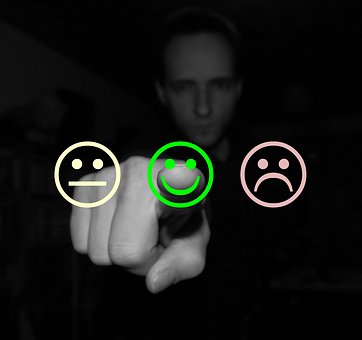
Feedback: Is It Good Or Bad?

You’ll be amazed at how many people are averse to getting a feedback after their presentation or a lecture delivered in front of a group of attendees. The smart ones, of course will take whatever feedback or review they can get. They know it will help improve the effectiveness of whatever it is they’d want to impart in their future presentations. The thing with good, old fashioned feedback is that it’s typically associated with something negative. Most persons would perceive it as a criticism, something painful. It’s seen as something that says “You didn’t perform well enough.” Or worse, “You weren’t good enough.” And yet, the whole purpose of a feedback is precisely to provide some personal reflection on how you fared with your presentation and to create an opportunity for some self-improvement. Heck, some feedback can pretty well say “That was a terrific presentation,” period. So, wouldn’t that help you see the good side of an honest feedback? In any case, with many of us still associating stigma with feedback, it should help to use our social intelligence to bring about a more positive and useful perspective from any kind of feedback. Here are some realities about feedback that’ll help us to understand its dynamics and expunge its negative implications: People put more importance on feedback when it comes from individuals they know, a colleague at work, a peer or a boss. The operative phrase here is “mutual respect.” When a feedback comes from someone “like us” or a friend who respects us rather than a foe, it becomes easier to accept the feedback whether it’s good or bad. When the feedback is about the process or content and not the person, the pill is usually easier to swallow. Doing this will have the recipient see the feedback not as a personal attack and therefore not react in an emotional way, in anger or defensive behavior. The last thing you’d like to happen is to create resentment or a grudge in the other person. The person giving a feedback should be empathetic. Be aware of the other guy’s mood and demeanor. The poor man may be going through bad times (financial troubles, death in the family, etc) and telling him his performance isn’t as good as it could be, could cause his confidence to go further downward. Put some focus on the future. Generally when giving feedback we’re so much into what happened in the past. Envisioning how things could be positively different in the future could provide the push for a favorable change. These are some guides that should help in giving more encouraging feed back to your team members. Remember though to give them a big pat on the back as well when they’re doing a great job. It’s easy picking someone for poor performance but give credit where and when it’s due. It makes everybody feel good when given the chance to rise above others and shine.

Feedback: Is It Good Or Bad? Read More »

You Don’t Need To Feel superior To Be Happy

Don’t go around believing that misery loves company. It doesn’t. You may think a lot of people who are feeling down would take comfort keeping the company of other unhappy people or even people less smarter than them. No. They don’t. In a study published in Personality and Social Psychology Bulletin, it was found that happy people are less influenced by comparisons between themselves and others. In other words, happy people, whether feeling superior or not, couldn’t care less who they spend time with. It could be with the members of the literary club or the Future Nuclear Physicists Association or some less intellectually endowed people. The Research That Backed This Up In a set of studies, a number of South Korean undergraduates (whose pre-determined levels of happiness scores were high or low) were asked to imagine they got an inferior grade on a certain test. They were then asked to envision a friend who, either scored better on the same test and had a happy disposition, or a friend who scored badly and was generally unhappy. These research participants were then requested to report whether they wanted to hang out or chill out with which friend and what their expected over-all mood would have been after spending time with either. The Findings The happy guys/gals, those who had high degrees of happiness, were keener on spending time with the friend who was “happy and scored well in the test” and felt they would have been happier, chirper after spending some time with him. On the other hand, the unhappy participants didn’t show any preference for either friend. So, what does this say? It says happy people are more likely to socialize with happy but superior, smarter friends. They are not uncomfortable with those who are more intellectually superior than them. They feel spending time with a happy friend is a much better, more rewarding decision. After all, as the research further adds, happy people are more generous, more helpful and more cooperative. They would tend to regard their friends in a more favorable light, are more attentive, pretty friendly and warmer. By and large, they have this light-hearted mood that is infectious, the benefits of which usually rubs off on us. It’s been said and proven often enough: happiness spurs success in our lives. So go out and be around happy and high performing friends. Be happy!

You Don’t Need To Feel superior To Be Happy Read More »

Is Multi-Tasking Really All That Effective? Look Again.

There was a time when multi-tasking was the big buzzword among management circles. It was a sort of a magic word that became a popular strategic component for higher productivity and efficiency. And it did seem, for quite a while, like doing multiple things at the same time, particularly for a lot of busy people, would make one more productive and end up with better, more positive results. What The Studies Say Contrary to this wide-spread misconception, several studies have shown that in most cases, multi-tasking impacts negatively on productivity and efficiency programs of both top management and executives. Here’s how it works. When you focus on more than one specific task at a time and you have to switch back and forth between these two or more tasks, this can in the end leave you less focused and less efficient. In other words, multi-tasking … when you’re focusing on many activities in a short time frame, moving from one task to the other, you are really creating a need for your brain to refocus. This can eat up your time and energy. What this actually boils down to, is … it takes longer to finish this cluster of tasks than it would if you had focused on each one individually. Learning More About Multi-Tasking Relative To Our Brain Having touched on multi-tasking’s contradictory findings from recent surveys, it doesn’t altogether mean that multi-tasking doesn’t work. It does. Multi-tasking works when you put together an activity or a task requiring concentration and focus with one that is principally physical and can be done almost automatically. This becomes possible because you can place most of your focus on one activity and have the other get done secondarily. There’s no need for you to keep shifting a sharp focus from one task to the other. An example of this would be listening to a Frank Sinatra CD while doing your workouts, or, having some casual chit-chat about that new couple next door who look like illicit lovers, while doing your house vacuuming. When Multi-Tasking Doesn’t Work. This animal doesn’t work and can be a vicious killer of focus and energy when you put together two or more tasks that require real conscious thought. For instance, you can’t be talking about saving on the power bills while doing your college thesis, or going about studying neuroscience while watching American Ninja Warrior. If you pretty much see yourself in these kinds of situations, walk away. Take a break. You don’t have to give it up entirely, but there are a few good alternatives. Get Into Single Tasking. One task at a time. It’ll save you time. As much as possible, develop this habit. If you sometimes find your back against the wall and have to cram 1001 activities into the same time and space, prioritize. Choose the most important task for the moment and focus fully on it, then work out a plan for when you can do the rest before clearing them from your mind. Chunking. It’s about time management. The whole idea is to set aside “a chunk of time” to focus on one particular task, minimizing interruptions and grouping similar tasks together like checking all your email in one sweep rather than going through them the whole day. Simply, this allows you to focus on these activities when you’ve got that “chunk of time” and eliminates the extra time you need to refocus when you’re shifting from one task to the other. So, multi-tasking? Think again.

Is Multi-Tasking Really All That Effective? Look Again. Read More »

Distractions All Around Your Workplace. How Do You Manage These And Get Back On Track?

You’re no stranger to this. That wild, crazy NBA nut case colleague of yours who has to keep tab of everything that happens in basketball in his smart phone. What about the junior exec on your right who has to answer all his calls through his speaker phone! These distractions can go on and on throughout the day. They’re big distractions … big and serious enough to get you climbing walls, right? Right. But don’t climb walls. Stay cool. You can do something about it. Distractions like these are what prevent us from accomplishing as much work as we should. After all, a University of California research did find out that an employee gets to spend only about eleven (11) minuteson a task before getting interrupted by one thing or another, or abandoning this to switch to another task at hand. And, once this flow of work gets disrupted, it’ll take about twenty three (23) minutes to get your bearings and get back on track. Here’s what productivity experts suggest you do: 1)   Literally stand up. There’s usually this guy who’d drop by your desk purportedly simply to ask a quick question but before you know it, he’s giving you a rundown on the results of the latest U.S. presidential candidates’ survey and why Donald Trump shouldn’t be leading Americans. With the twenty three minutes you’ll need to get back on track, you’ll find yourself cramming before the day is out. Stand up! The experts say. It’s easier to cut a conversation short when you’re standing than it is when this guy gets cozy and comfortable. 2)   Put up that “Don’t Disturb!” sign. This will speak volumes to those who’d just like to chat with you. And, get rid of those candy and cookie jars in your cabinet. They’re a sure invitation to interruptions. 3)   Take control of your time. If your distractions are work-related such as emails or unscheduled meetings, get into the habit of listing down things to be taken up with certain people and do it in one sweep. This will avoid back and forth email exchanges and frequent drop-ins. 4)   Recognize you also create your own distractions. Not all disruptions happen because of your co-workers. Half the time we do it ourselves. Our addiction to Instagram, for instance, Facebook or our smart phones. These can easily get you off track. Be aware of these. Control and keep them to a minimum level. 5)   Go single tasking. Experts say it’s the better way to go. It not only helps you to get more things done. It tends to make you sharper and smarter as it motivates you to attend to your priorities. Plus, it brings down your stress level. Keep these suggestions at the back of your mind. The next time a disruptive situation crops up, you’ll know what to do without climbing walls!

Distractions All Around Your Workplace. How Do You Manage These And Get Back On Track? Read More »

viTiếng Việt
Scroll to Top

Contact Us

Simply complete the form below and we’ll get in touch with you, normally within 24 hours.

Enter your email address to download the Retooling Your Mindset eBook!

You have successfully subscribed to the newsletter

There was an error while trying to send your request. Please try again.

EQuest Asia will use the information you provide on this form to be in touch with you and to provide updates and marketing.

Enter your email address to download A Brief Guide to Happier Workplaces eBook!

You have successfully subscribed to the newsletter

There was an error while trying to send your request. Please try again.

EQuest Asia will use the information you provide on this form to be in touch with you and to provide updates and marketing.

Enter your email address to download Take a burnout test!

You have successfully subscribed to the newsletter

There was an error while trying to send your request. Please try again.

EQuest Asia will use the information you provide on this form to be in touch with you and to provide updates and marketing.

Enter your email address to download the EQuest Asia Brochure!

You have successfully subscribed to the newsletter

There was an error while trying to send your request. Please try again.

EQuest Asia will use the information you provide on this form to be in touch with you and to provide updates and marketing.

Enter your email address to download your document!

You have successfully subscribed to the newsletter

There was an error while trying to send your request. Please try again.

EQuest Asia will use the information you provide on this form to be in touch with you and to provide updates and marketing.

Thank you for sign up! Enjoy your download.

Thank you for sign up! Enjoy your download.

Thank you for sign up! Enjoy your download.

Thank you for sign up! Enjoy your download.

Thank you for sign up! Enjoy your download.