
Mindfulness

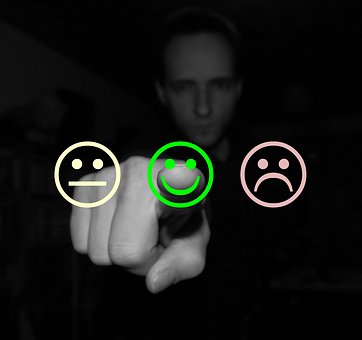
Feedback: Is It Good Or Bad?

You’ll be amazed at how many people are averse to getting a feedback after their presentation or a lecture delivered in front of a group of attendees. The smart ones, of course will take whatever feedback or review they can get. They know it will help improve the effectiveness of whatever it is they’d want to impart in their future presentations. The thing with good, old fashioned feedback is that it’s typically associated with something negative. Most persons would perceive it as a criticism, something painful. It’s seen as something that says “You didn’t perform well enough.” Or worse, “You weren’t good enough.” And yet, the whole purpose of a feedback is precisely to provide some personal reflection on how you fared with your presentation and to create an opportunity for some self-improvement. Heck, some feedback can pretty well say “That was a terrific presentation,” period. So, wouldn’t that help you see the good side of an honest feedback? In any case, with many of us still associating stigma with feedback, it should help to use our social intelligence to bring about a more positive and useful perspective from any kind of feedback. Here are some realities about feedback that’ll help us to understand its dynamics and expunge its negative implications: People put more importance on feedback when it comes from individuals they know, a colleague at work, a peer or a boss. The operative phrase here is “mutual respect.” When a feedback comes from someone “like us” or a friend who respects us rather than a foe, it becomes easier to accept the feedback whether it’s good or bad. When the feedback is about the process or content and not the person, the pill is usually easier to swallow. Doing this will have the recipient see the feedback not as a personal attack and therefore not react in an emotional way, in anger or defensive behavior. The last thing you’d like to happen is to create resentment or a grudge in the other person. The person giving a feedback should be empathetic. Be aware of the other guy’s mood and demeanor. The poor man may be going through bad times (financial troubles, death in the family, etc) and telling him his performance isn’t as good as it could be, could cause his confidence to go further downward. Put some focus on the future. Generally when giving feedback we’re so much into what happened in the past. Envisioning how things could be positively different in the future could provide the push for a favorable change. These are some guides that should help in giving more encouraging feed back to your team members. Remember though to give them a big pat on the back as well when they’re doing a great job. It’s easy picking someone for poor performance but give credit where and when it’s due. It makes everybody feel good when given the chance to rise above others and shine.

Feedback: Is It Good Or Bad? Read More »

You Don’t Need To Feel superior To Be Happy

Don’t go around believing that misery loves company. It doesn’t. You may think a lot of people who are feeling down would take comfort keeping the company of other unhappy people or even people less smarter than them. No. They don’t. In a study published in Personality and Social Psychology Bulletin, it was found that happy people are less influenced by comparisons between themselves and others. In other words, happy people, whether feeling superior or not, couldn’t care less who they spend time with. It could be with the members of the literary club or the Future Nuclear Physicists Association or some less intellectually endowed people. The Research That Backed This Up In a set of studies, a number of South Korean undergraduates (whose pre-determined levels of happiness scores were high or low) were asked to imagine they got an inferior grade on a certain test. They were then asked to envision a friend who, either scored better on the same test and had a happy disposition, or a friend who scored badly and was generally unhappy. These research participants were then requested to report whether they wanted to hang out or chill out with which friend and what their expected over-all mood would have been after spending time with either. The Findings The happy guys/gals, those who had high degrees of happiness, were keener on spending time with the friend who was “happy and scored well in the test” and felt they would have been happier, chirper after spending some time with him. On the other hand, the unhappy participants didn’t show any preference for either friend. So, what does this say? It says happy people are more likely to socialize with happy but superior, smarter friends. They are not uncomfortable with those who are more intellectually superior than them. They feel spending time with a happy friend is a much better, more rewarding decision. After all, as the research further adds, happy people are more generous, more helpful and more cooperative. They would tend to regard their friends in a more favorable light, are more attentive, pretty friendly and warmer. By and large, they have this light-hearted mood that is infectious, the benefits of which usually rubs off on us. It’s been said and proven often enough: happiness spurs success in our lives. So go out and be around happy and high performing friends. Be happy!

You Don’t Need To Feel superior To Be Happy Read More »

Emotional Manifestations That Can Kill Healthy Teams

There is an old Spanish saying “Mi casa es su casa.” (My house is your house.) Put in the context of working with people in the office, it transcends simple hospitality. It goes deeper to mean that what I am, what I have, my skills, my background and experience are yours for our team to utilize. If that isn’t the spirit of teamwork, I don’t know what is. In today’s business world, an attitude like this takes on great significance, as pretty much everything we do is done with others in a group. And when we do it effectively and well, with the rest of the team working with one another for a common goal, success becomes inevitable. Sadly, for one reason or another that “rugged individualism” idea almost always gets in the way. This along with some companies’ divorcing their teams from rewards and compensation leads to good teams withering on the vine and worst, team members or leaders begin to feel free to engage in some bad behavior leading to dysfunction. What Not To Do With Your Team Members Whether you’re a team leader or a member, what follows might help you “not do” these common mistakes that produce big cracks in good, healthy teams. Here are the don’ts: Don’t stick to your guns. It’s a bad phrase that says … we do it my way or the team can go take a hike in the highway. Don’t ruin the team by being single minded and being obsessive about how to get things done. Listen and consider the other team members’ ideas. Don’t go looking at the glass half-empty. If you go around messing with the team members’ minds by focusing on everything that could go wrong and being the “voice of doom”, you’ll be contaminating them with your negative emotions and cynicism. Adhering to this kind of feeling will guarantee killing the trust, enthusiasm, creativity and joy that are important to the group’s success. Don’t be insensitive to the people’s feelings. Care about them by being considerate and thoughtful about how they see things. Appreciate their insights, their background and intelligence. You’re not the only smart guy in the team (and even if you are, don’t flaunt it.) Don’t bully your team members. Don’t start taking immediate action on your impulses and feelings. Instead, apply your emotional intelligence. Filter what you say or do. Given the stress that people work with in today’s extremely competitive business environment, it’ll be great for the team if you were to blend and work well with each member. The don’ts are emphasized in bold letters for the simple reason that these are the known most common mistakes team leaders and some team members do in meeting the challenges of their companies. Regrettably, with team dysfunction. these teams fell short of their goals. Go over them again, then avoid them like the plague!

Emotional Manifestations That Can Kill Healthy Teams Read More »

How Personal Bias Impact On Your hiring and Management Of People.

It’s a fact. We all have unconscious biases and without being aware of it, they get to play an integral role in both our personal and professional lives. We see a middle-eastern looking man, sporting a long, dirty beard and wearing a turban and immediately we associate his looks to some terroristic suicide bomber from some place like Syria, and we stay away from him. He may, after all have a ton of explosives strapped to his body. In the same vein we bump into some young man looking like a trendy ivy leaguer, clean-shaven and wearing the latest fashionable suit, and we say. “There’s a decent, educated guy who must be a top manager in a hot-shot company. Wouldn’t it be nice for our daughter Sarah to meet him?” Sure, if a chance came up, Sarah would be glad to meet him – her parents (going by their bias) not having any minor qualms at all, that this person, for all his good appearance could well be a serial killer. How Our Biases Work. That’s how it goes with our biases. Our many years of experience, personal attitudes and outlook about certain things, our culture and beliefs – over time, they build a set of instinctive prejudices and preferences which we generally take for granted since we are, for the most part unaware of them. These things can range from the trivial like “It’s silly to have your kids believing in Santa Claus” to prejudices that are damaging as in believing Caucasians and Westerners are smarter, sharper and more superior to Asians. When we jump into these initial impressions and snap judgments of people without any clear or concrete basis, they’re most likely the result of our biases. As they come up during casual conversations or as you see people on your way to work and perceive them with your bias, they would generally be harmless. But, when it comes to recruitment and selection of people for your management teams or for simply, decision-making when hiring employees, they could cause some real big problems. How Biases Can Affect Your Hiring Decisions  While it makes sense to consider a job candidate’s actual experience, skills and potential value to your company, you might decide on somebody because he/she has basically an outlook that runs parallel to yours like putting a premium on teamwork and sense of cooperativeness when the need is for somebody who’s strong-willed and is able to make fast decisions. Of course, this can work the other way around – hiring a strong, take-charge person like you when what the company needs is a team player. These biases by affinity (same outlook, same beliefs, etc.) can, in the long run lead to an organisation of clones. As a management guru once said …”If everybody is thinking the same way, a lot of you are not needed here” So, What Can You Do To Overcome These Biases? Just about the best thing you could do is to consciously and deliberately build up self-insights. Look deep into yourself and uncover, and then accept your unconscious biases about people looking for a job. And then, more importantly, you should understand how your biases are most likely to impact in your hiring and selection process.

How Personal Bias Impact On Your hiring and Management Of People. Read More »

Is Multi-Tasking Really All That Effective? Look Again.

There was a time when multi-tasking was the big buzzword among management circles. It was a sort of a magic word that became a popular strategic component for higher productivity and efficiency. And it did seem, for quite a while, like doing multiple things at the same time, particularly for a lot of busy people, would make one more productive and end up with better, more positive results. What The Studies Say Contrary to this wide-spread misconception, several studies have shown that in most cases, multi-tasking impacts negatively on productivity and efficiency programs of both top management and executives. Here’s how it works. When you focus on more than one specific task at a time and you have to switch back and forth between these two or more tasks, this can in the end leave you less focused and less efficient. In other words, multi-tasking … when you’re focusing on many activities in a short time frame, moving from one task to the other, you are really creating a need for your brain to refocus. This can eat up your time and energy. What this actually boils down to, is … it takes longer to finish this cluster of tasks than it would if you had focused on each one individually. Learning More About Multi-Tasking Relative To Our Brain Having touched on multi-tasking’s contradictory findings from recent surveys, it doesn’t altogether mean that multi-tasking doesn’t work. It does. Multi-tasking works when you put together an activity or a task requiring concentration and focus with one that is principally physical and can be done almost automatically. This becomes possible because you can place most of your focus on one activity and have the other get done secondarily. There’s no need for you to keep shifting a sharp focus from one task to the other. An example of this would be listening to a Frank Sinatra CD while doing your workouts, or, having some casual chit-chat about that new couple next door who look like illicit lovers, while doing your house vacuuming. When Multi-Tasking Doesn’t Work. This animal doesn’t work and can be a vicious killer of focus and energy when you put together two or more tasks that require real conscious thought. For instance, you can’t be talking about saving on the power bills while doing your college thesis, or going about studying neuroscience while watching American Ninja Warrior. If you pretty much see yourself in these kinds of situations, walk away. Take a break. You don’t have to give it up entirely, but there are a few good alternatives. Get Into Single Tasking. One task at a time. It’ll save you time. As much as possible, develop this habit. If you sometimes find your back against the wall and have to cram 1001 activities into the same time and space, prioritize. Choose the most important task for the moment and focus fully on it, then work out a plan for when you can do the rest before clearing them from your mind. Chunking. It’s about time management. The whole idea is to set aside “a chunk of time” to focus on one particular task, minimizing interruptions and grouping similar tasks together like checking all your email in one sweep rather than going through them the whole day. Simply, this allows you to focus on these activities when you’ve got that “chunk of time” and eliminates the extra time you need to refocus when you’re shifting from one task to the other. So, multi-tasking? Think again.

Is Multi-Tasking Really All That Effective? Look Again. Read More »

viTiếng Việt
Scroll to Top

Contact Us

Simply complete the form below and we’ll get in touch with you, normally within 24 hours.

Enter your email address to download the Retooling Your Mindset eBook!

You have successfully subscribed to the newsletter

There was an error while trying to send your request. Please try again.

EQuest Asia will use the information you provide on this form to be in touch with you and to provide updates and marketing.

Enter your email address to download A Brief Guide to Happier Workplaces eBook!

You have successfully subscribed to the newsletter

There was an error while trying to send your request. Please try again.

EQuest Asia will use the information you provide on this form to be in touch with you and to provide updates and marketing.

Enter your email address to download Take a burnout test!

You have successfully subscribed to the newsletter

There was an error while trying to send your request. Please try again.

EQuest Asia will use the information you provide on this form to be in touch with you and to provide updates and marketing.

Enter your email address to download the EQuest Asia Brochure!

You have successfully subscribed to the newsletter

There was an error while trying to send your request. Please try again.

EQuest Asia will use the information you provide on this form to be in touch with you and to provide updates and marketing.

Enter your email address to download your document!

You have successfully subscribed to the newsletter

There was an error while trying to send your request. Please try again.

EQuest Asia will use the information you provide on this form to be in touch with you and to provide updates and marketing.

Thank you for sign up! Enjoy your download.

Thank you for sign up! Enjoy your download.

Thank you for sign up! Enjoy your download.

Thank you for sign up! Enjoy your download.

Thank you for sign up! Enjoy your download.