
Productivity

Tips on Having an Effective One-on-One Meeting

Many employees think one-on-one meetings are useless. They go through the motions and expect nothing to come out of it. The reason could be simple. The wrong questions are being asked and nothing worthy is discussed. You want to get the most out of these sit-downs as a leader. These are not ordinary conversations, although you want to set a conversational tone to create a relaxed atmosphere. Much feedback can be gained from one-on-one meetings if done right. The challenge is that many bosses don’t realize that it’s their responsibility to conduct meaningful discussions. If you’re a manager, boss or the top person in your organization, take note of the following before you call or schedule a sit-down. 1.     The first step is to review notes from past meetings. It will give you an idea of where your starting point is. 2.     The next step is to prepare questions relevant to the person you’re to meet. Don’t waste time on subjects your employee doesn’t know about. Avoid templates or generic questionnaires. These don’t do much good today. However, there are basic questions that you should consider and here are several: Encourage your employee to keep talking. So don’t forget the following: ·  Go on… ·  Why do you think that? ·  Tell me more. ·  Give me an example. 3.     Listen and take notes, which means putting on silent distractions like phones. You may not agree, but acknowledge what your employee is saying. Also, you shouldn’t talk too much or too little. Offer suggestions and advice when you can. 4.     Recap and plan for the next meeting. Summarize everything discussed and ask your employee if you missed anything. Also, determine what needs to be addressed the next time you meet. After your meeting, evaluate how you did and find out how you can do better next time.

Tips on Having an Effective One-on-One Meeting Read More »
Wellness Statistics You Should be Aware Of

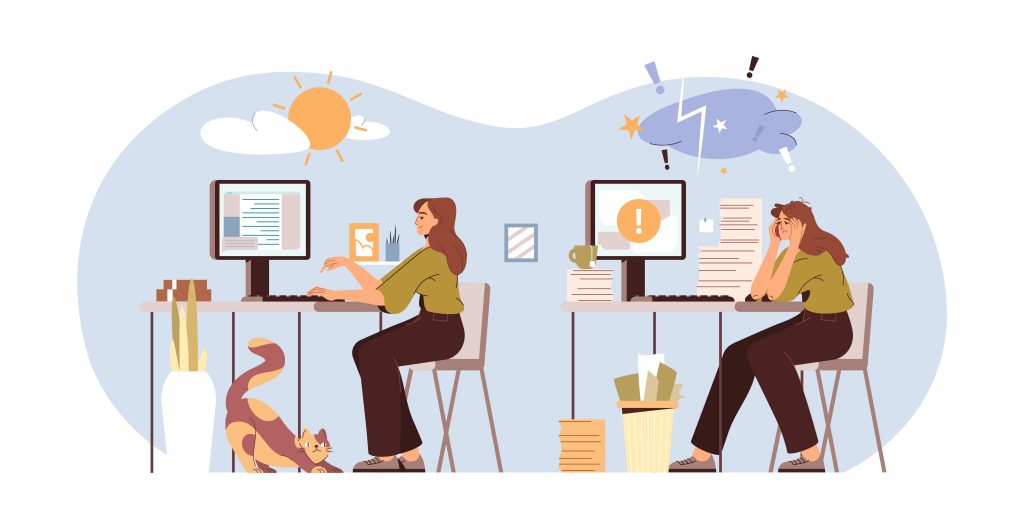
The next time you see a lethargic employee dozing off, it might be more than just a lack of sleep. Telling an employee to go home early and get some rest may not be enough.  There are underlying causes that leaders or bosses should know. It’s not employees are just physically exhausted. They can be mentally, emotionally and psychologically tired too.  Their well-being might also be at stake! Organizations should be watchful and recognize which employees exhibit the signs above.  The things you should know. First, a study showed that front-line employees are the most susceptible to burnout. Those who deal with customers daily can feel drained at the end of the day.  Second, the same study found that 16% of employees experience work conditions that affect their sleep. Again, this should be a wake-up call for management.  Third, 25% of employees feel exhausted after an average day at work.  Fourth, about a third of employees start the day low on energy. The personal lives of employees can affect their job performance. For instance, most people think of bills to pay, the health of loved ones and the state of their personal relationships. It’s easy to tell them to remain focused while at work. But, if workplace conditions increase stress and anxiety, employees and the organization suffer. The things you can do. 1.     Assign functions judiciously. As a means of staying afloat or profitable, organizations usually downsize. Additional responsibilities are passed on to the remaining employees. It’s common now for departments to take charge of functions unrelated to their area of expertise.  It’s best for management to study which worker can handle more work. It isn’t enough to determine if a person has the required skills. One of the questions you must answer is whether that person can handle more stress. 2.     Conduct job evaluations regularly.  Ideally, employees should enjoy their job. But, maybe they are lethargic because there are tasks that they dislike doing. Or they no longer find their work motivating. As a result, they’re no longer excited to get to work.     3.     Evaluate your physical workplace. Cramped cubicles, uncomfortable chairs, poor ventilation and lighting have adverse effects. Keep in mind that employees spend at least 8 hours a day at work.  4.     Create or Update your Wellness Program. It doesn’t matter if you lead or manage a small organization. These programs aren’t for big groups only. Consider the following benefits: a.     Improved employee health habits. b.     Reduced stress and anxiety. c.     Improved employee performance. d.     Lower health care costs. Feature photo: Burnout vector created by redgreystock

Wellness Statistics You Should be Aware Of Read More »

What To Do When Overwhelmed

There’s too much work to do and not enough time. It’s one of the common complaints by an overwhelmed person. Maybe, you find yourself in the same plight often. What does being overwhelmed mean? It describes a situation when something or someone is too much for a person to manage. Swamped, engulfed and flooded are some of the word’s synonyms.   By the way, this isn’t about positive things people can be overwhelmed with. Joy, excitement and love are a few examples. I’ll focus more on jobs because many people feel they’re working harder to keep up or remain productive. They’re mentally tired, irritable, stressed and restless at night. Most probably, they’re feeling overwhelmed.    How to Deal with Feeling Overwhelmed Don’t fret if you’re one of them. There are ways to deal with it and here are some. Set aside some quiet time. Staying at your office is not a good idea unless you can lock the door to your room. There are too many distractions. Instead, take a short walk or find a relaxing spot outdoors. A 10-minute walk or a quick change in scenery will do wonders for your mind and body. Don’t think about the tasks at hand. Instead, enjoy your surroundings. Take deep breaths. It’s a short respite, but it’s a break that benefits you. Assess your situation. When you begin the day, you already know what is in store. The tasks, meetings, return calls, etc. So, what was the thing that made you feel overwhelmed? Was it a conversation, call, message or e-mail?  Finding that moment when you suddenly felt swamped might give you a better appreciation of your situation. For example, an additional task was given to you. After your quiet time, you might realize it isn’t really sizable as you first thought. Review your to-do list. What needs to be done today? Prioritize tasks that need to be accomplished now. Focus on these alone. Stop thinking about jobs that you will work on tomorrow. When you’re finished with your current tasks, work on those that need to be done in the future. Lessen your workload so you’ll never feel overwhelmed. Lastly, avoid procrastination. Doing things right before deadlines is a sure recipe for being overwhelmed. Delegate tasks. You probably heard of this – “If you want a thing done well, do it yourself.” This is not true all the time unless you’re a one-man show. Also, many people are perfectionists who would do everything rather than assign some of them to others. They don’t trust their colleagues to do a good job. Try to let go and give your colleagues a chance. Your time might be spent better on tasks that require your skills. Stay positive. Maybe your boss assigns you more jobs because you’re the most reliable person in your organization. Have you thought about this?  Also, you might feel overwhelmed because you have a negative view of things. Try changing your perspective. Think of your situation as something that will make you better. Always look for that silver lining.

What To Do When Overwhelmed Read More »

Face Change with Emotional Intelligence

These days, change in the workplace can cause anxiety and feelings of dread. Employees get stressed by the mention of the word alone. We live in an environment now with many unknowns. Organizations often have to make hard decisions because tomorrow could be different from today. As a result, employees brace for the worst. For instance, online selling skyrocketed during the early stages of COVID 19. This was great for businesses. But, it also meant salespersons across many industries lost their jobs as more people shopped on the internet. So, how do you deal with change today? – Especially when the outcome does not favor you. Aside from logic, use emotional intelligence. It’s not that hard and here’s how you’ll go about it.  Identify your emotions. Do you feel fearful, angry or sad with upcoming changes in your workplace? Knowing what emotions you are experiencing will help you respond to things beyond your control. For instance, ask yourself why you’re irate? At first, you might think you’re angry at the decision-makers in your organization. However, the real source of your anger is your feelings of powerlessness. Yes, change can make people feel impotent, especially when others can make decisions that affect their lives. This leads to the next step.  Accept. Acceptance means being aware of what you feel. When you are honest with yourself, you can pinpoint the source of your emotions. Denying you’re angry, for instance, will not help.  Also, have you heard of the expression “it is what it is”? It’s meant to describe a situation that cannot be changed. An example would be the death of a loved one. People who acknowledge their grief adapt to their loss better than those who do not.  Lastly, when an organization decides on a course of action, there’s no turning back unless it’s proven to be a mistake in the future. So instead of resisting, give change a chance. Be hopeful. Hope is a positive emotion. People who believe that things will turn out well have better chances of success.  Consider change as a stepping stone to more possibilities.  You might be unaware of the benefits of changes in the workplace. Also, it’s not always about individuals. Decision-makers think about what’s best for everyone. Maybe, sacrifices have to be made. So, being laid-off is not the end of the world. It only means it’s time to explore other opportunities. Here’s something to think about. Before becoming famous, Walt Disney was fired as a cartoonist of the Kansas City Star newspaper.      

Face Change with Emotional Intelligence Read More »

Why To-Do Lists are Good for You

Post-it notes have become part of people’s lives. You’ll find it everywhere – on desks, the fridge, walls and doors. These are constant reminders of all the tasks that need to be done. Whether it’s not to forget to buy milk on the way home or pay bills, people are helped a lot by little pieces of paper. It’s not just Post-it notes. Others use memo pads, diaries and even their digital devices as reminders. Unfortunately, they can be overwhelmed by too many of these. But did you know that these can significantly help reduce anxiety and accomplish tasks. >> You achieve clarity Writing down or typing tasks give you a clearer picture of what needs to be done. When you do, you often realize that it’s mostly small stuff. The human brain can create mountains out of molehills. Remember, a small rock can cast a large shadow. It makes a difference when people focus on the former and not the latter. When people specify, the job ahead becomes more effortless. Or, if a task is too big, breaking it into smaller chunks makes it more manageable. But write or again, type these down. >> You prioritize What needs to be done now or today? Itemizing tasks can help you determine which are urgent and not. This also enables you to focus on one task at a time. Tests have shown a to-do list helps people. Try this out? Think of all the tasks you need to accomplish and often, you’ll forget one or several. Also, you can’t possibly sort your mental list according to importance. Now, try writing these on paper. Wouldn’t you agree, there’s a vast difference? >> You can schedule Some people get rid of simple tasks that don’t require effort and thinking. This is because it takes them time to warm up. Others, they like to handle challenging jobs first thing in the morning. With a to-do list, you can schedule which tasks to accomplish first. You can even set a time for checking on your social media accounts. Doing so will allow you to achieve more during the day. >> You Get a Sense of Achievement Every time you check or cross out a task on your to-do list, you feel a sense of accomplishment. This is important because you become more motivated and engaged in whatever job you need to do. There’s nothing wrong with feeling proud. In fact, it has positive effects on your health too. So start working on your to-do lists. These can make your life a bit easier.    

Why To-Do Lists are Good for You Read More »

viTiếng Việt
Scroll to Top

Contact Us

Simply complete the form below and we’ll get in touch with you, normally within 24 hours.

Enter your email address to download the Retooling Your Mindset eBook!

You have successfully subscribed to the newsletter

There was an error while trying to send your request. Please try again.

EQuest Asia will use the information you provide on this form to be in touch with you and to provide updates and marketing.

Enter your email address to download A Brief Guide to Happier Workplaces eBook!

You have successfully subscribed to the newsletter

There was an error while trying to send your request. Please try again.

EQuest Asia will use the information you provide on this form to be in touch with you and to provide updates and marketing.

Enter your email address to download Take a burnout test!

You have successfully subscribed to the newsletter

There was an error while trying to send your request. Please try again.

EQuest Asia will use the information you provide on this form to be in touch with you and to provide updates and marketing.

Enter your email address to download the EQuest Asia Brochure!

You have successfully subscribed to the newsletter

There was an error while trying to send your request. Please try again.

EQuest Asia will use the information you provide on this form to be in touch with you and to provide updates and marketing.

Enter your email address to download your document!

You have successfully subscribed to the newsletter

There was an error while trying to send your request. Please try again.

EQuest Asia will use the information you provide on this form to be in touch with you and to provide updates and marketing.

Thank you for sign up! Enjoy your download.

Thank you for sign up! Enjoy your download.

Thank you for sign up! Enjoy your download.

Thank you for sign up! Enjoy your download.

Thank you for sign up! Enjoy your download.