
Mindfulness

Wellness Statistics You Should be Aware Of

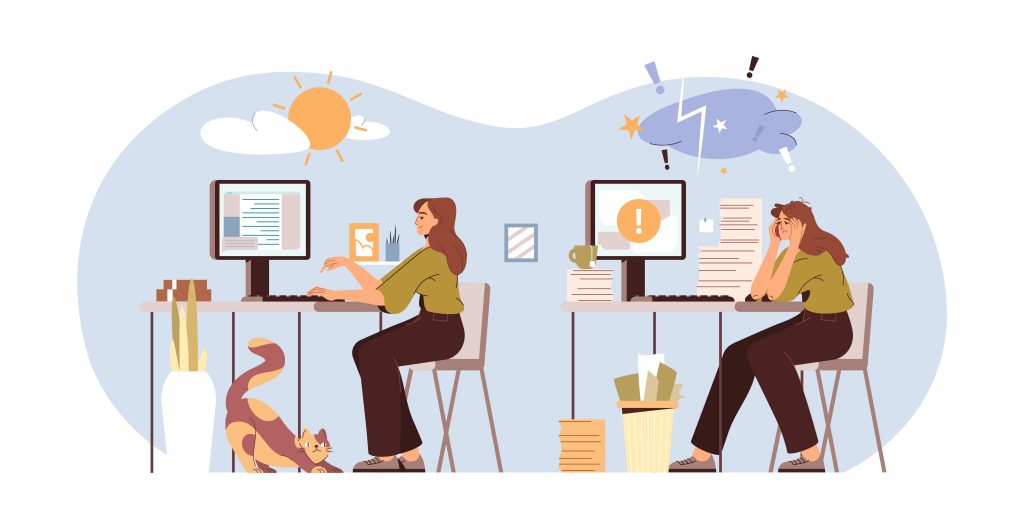
The next time you see a lethargic employee dozing off, it might be more than just a lack of sleep. Telling an employee to go home early and get some rest may not be enough.  There are underlying causes that leaders or bosses should know. It’s not employees are just physically exhausted. They can be mentally, emotionally and psychologically tired too.  Their well-being might also be at stake! Organizations should be watchful and recognize which employees exhibit the signs above.  The things you should know. First, a study showed that front-line employees are the most susceptible to burnout. Those who deal with customers daily can feel drained at the end of the day.  Second, the same study found that 16% of employees experience work conditions that affect their sleep. Again, this should be a wake-up call for management.  Third, 25% of employees feel exhausted after an average day at work.  Fourth, about a third of employees start the day low on energy. The personal lives of employees can affect their job performance. For instance, most people think of bills to pay, the health of loved ones and the state of their personal relationships. It’s easy to tell them to remain focused while at work. But, if workplace conditions increase stress and anxiety, employees and the organization suffer. The things you can do. 1.     Assign functions judiciously. As a means of staying afloat or profitable, organizations usually downsize. Additional responsibilities are passed on to the remaining employees. It’s common now for departments to take charge of functions unrelated to their area of expertise.  It’s best for management to study which worker can handle more work. It isn’t enough to determine if a person has the required skills. One of the questions you must answer is whether that person can handle more stress. 2.     Conduct job evaluations regularly.  Ideally, employees should enjoy their job. But, maybe they are lethargic because there are tasks that they dislike doing. Or they no longer find their work motivating. As a result, they’re no longer excited to get to work.     3.     Evaluate your physical workplace. Cramped cubicles, uncomfortable chairs, poor ventilation and lighting have adverse effects. Keep in mind that employees spend at least 8 hours a day at work.  4.     Create or Update your Wellness Program. It doesn’t matter if you lead or manage a small organization. These programs aren’t for big groups only. Consider the following benefits: a.     Improved employee health habits. b.     Reduced stress and anxiety. c.     Improved employee performance. d.     Lower health care costs. Feature photo: Burnout vector created by redgreystock

Wellness Statistics You Should be Aware Of Đọc thêm »

Why You Should Give Meditation a Second Look

It doesn’t sound like fun for many people. Nor is it the kind of relaxing activity we might indulge in. Maybe, images of people in a lotus position practicing an Indian or Buddhist discipline came to mind when you saw this article’s title. You might be thinking of Yoga, which is not the same as meditation. However, the latter is part of the former. According to Wikipedia, meditation is: “…a practice where an individual uses a technique – such as mindfulness, or focusing the mind on a particular object, thought, or activity – to train attention and awareness, and achieve a mentally clear and emotionally calm and stable state.” So, what’s the big deal about mediation? Benefits of Meditation According to research by neuroscientist Sara Lazar, people who practiced mindfulness meditation had more grey matter in their brains’ frontal cortex. This is responsible for decision-making, personality expression, and controlling social behavior. The frontal cortex also mobilizes thoughts and actions in goal pursuits. In another study by the Dept. of Neurology of UCLA, meditation helps protect the brain from aging. So now we have two independent researchers arriving at almost the same conclusion. However, scientists believe more studies have to be made. You’d agree it’s something to think about. I’ve been spending an hour each day solving puzzles since it’s been said that this exercises the left and right sides of our brains. But it seems that we can do more to improve our minds and general well-being. For now, let’s focus on one type – mindfulness meditation. Here are its benefits you may not be aware of. Meditation decreases activity in the area of the brain responsible for mind-wandering. This is according to a study at Yale University. A wandering mind is often an unhappy mind. Meditation increases focus on the here and now. Meditation is as good as antidepressants, according to Madhav Goyal of Johns Hopkins. It’s not a cure for depression, but it can help people cope with symptoms. A few minutes of meditation each day can reduce anxiety and relieve stress. Meditation improves memory. People who meditate are less impulsive and are more in control of their emotions. This leads to healthier personal and professional relationships. Meditation can lower blood pressure. Types of Meditation There are other kinds of meditation aside from mindfulness. We’ll just briefly go over each and maybe you’ll be interested in one should you give meditation a try. Spiritual. Connect through prayer and in silence with your God or whatever you call a higher being or power. With Religions like Hinduism and Christianity, essential oils are burned as incense. Zen Meditation. This is part of Buddhism, but the movies associate it with martial arts. Shaolin monks fighting evil is a common theme. This type can be considered spiritual too. One of the aims of Zen meditation is to experience an awakening of the mind. Body Scan. The main focus of this type is our physical bodies. The aim is to relax every part from head to toe to relieve tension. This could be done while sitting in a quiet and comfortable room. Mantra Meditation. This is another type popularized by movies or television. Monks in a mountain monastery chanting “Om” is a familiar scene depicted in many films. Chants may differ, but the goal is to be one with your environment. Compassion Meditation. It’s also known as loving-kindness. Sensing and sending love while in meditation is this type’s goal. Practitioners learn to love themselves and everyone. Transcendental Meditation. Commonly associated with out-of-body experiences, the aim is to rise above one’s being. It can also be spiritual and a mantra can be chanted. Meditation is not for everyone. But, think of the benefits. Thankfully, there are several videos of short meditation exercises on YouTube. You should give it a try just to satisfy your curiosity. Who knows, it might work for you.

Why You Should Give Meditation a Second Look Đọc thêm »

Improving Productivity will Help you reach your Full Potential

Most of us prepare a to-do list before turning in for the night. We believe that we could become more productive if we identify tasks that need to be done the next day. But, did you know that making a long list could be counter-productive? Experts recommend we should limit list items to three. We’ve always assumed being productive means accomplishing a lot of tasks each day. Maybe this is true at an assembly line. But, productivity isn’t measured in quantifiable terms alone. The quality of our accomplishments will matter even more. Shoddy work doesn’t count when we talk about productivity. How do we then achieve improved productivity? We have a few tried and tested ideas and invite you to consider them. We’re sure you’ve heard of them before, but it doesn’t hurt to remind you. Schedule Time for Chores If you’re among the many who are now working from home, you know that you can’t escape these. Some of us work better in the morning while others prefer afternoons or evenings. Attend to your chores and errands on your least-productive hours. Once these are done, you can focus better on work. Designate Time for Work Now that you have set time for unrelated tasks, you now have the rest of a day available for work. We are our greatest enemy when we postpone, delay or procrastinate. Stick to your schedule. This is easier said than done, especially with all the distractions around us. But, once we develop the necessary routine, we also improve our discipline to follow our schedule. “Time is a currency you can only spend once. So be careful how you spend it.” – Harmon Okinyo Keep Your Goals in Mind What are you doing most of the day and why are you doing it? We should ask this question often so we can remind ourselves what our goals are. When we do, we can better determine which tasks are related or contribute to the achievement of our goals. Focus on Tasks at Hand When working with your pc or laptop, there’s always the temptation to check on your social media, read the news and browse on unrelated subjects. There’s nothing wrong with indulging ourselves for a few minutes. But, we know five minutes could quickly turn into a half-hour or an hour. We may have several tasks to accomplish, but we can only attend to one at a time. Being focused requires willpower to shut out distractions, daydreams and even worries. The latter can cause anxiety, which hampers our productivity. How about rewarding ourselves after finishing a task? Experts believe that this helps and self-rewards improve our self-esteem. So, how about eating your favorite ice cream or five minutes on your FB or IG account once you’re done with a job? Have Enough Energy No matter how motivated we are, we won’t get far if we lack physical strength. This means at least 7 hours of sleep based on scientific research. Ignore those who say we can survive with less. Also, our body requires at least 20 minutes of exercise each day. Stand up and take a five-minute walk every hour if you sit down in front of your PC or laptop all day. It will do us good and new ideas can crop up during short breaks. Of the above, managing our time is the most challenging and yet most important step. It will take time, pardon the pun. But, with trial and discipline, we’ll discover the routine that works best for us.

Improving Productivity will Help you reach your Full Potential Đọc thêm »

How To Be Your Best With A Growth Mindset

A growth mindset has been widely defined by business leaders as a belief that any one can grow and develop his/her ability for learning, improving and becoming a better person in the workplace or in any other circumstance. It’s not a fixed mindset, something that asserts one has a natural-born, genetic talent and skills and that one either has them or not. A growth mindset is the “I-can-learn-and-do-the-job-well” kind of thinking and it’s what can make the difference in your career. And so, on Monday, when you report back for work from a blissful, quiet and relaxing, no-mother-in-law issues week-end, come in ready to adjust and make changes in the way you think about yourself at work. Make use of these new insights to get in real top shape. Here’s what you can do to build and maintain a growth mindset to help you achieve and exceed your usual output: Recognize, know and accept you’ve got great potential for growth. Find yourself some quiet time to do some pencil pushing. Write down your plans, outlining where you are at present and where you’d want to be by yearend. Then write down clearly the measures you need to take to get there. Share these plans with a trusted colleague or friend. It’ll sort of “push you” into sticking to these plans and help you hit your goals. Look for favors or things that you can do to help others. Professor Adam Grant of Wharton, in his book “Give and Take” says helping others drives our success. He contends that people who think of others in their motivation, who works on both individual and community goals are the most successful achievers. When you commit to help others and put this above your own well-being, you are already practicing great leadership qualities. Even small things, like coaching or mentoring a co-worker who’d benefit from your background, education or talent, goes along way towards helping you reach your personal goals. Be curious and open your mind to new ideas. Part of having a growth mindset is recognizing that our total work experience is a continuing learning process. When you’ve got this embedded in your mind, the challenges that’ll face you will become less scary. This is where your love for learning will do wonders big time! Open your eyes, heart and mind to new ideas. Don’t knock them down no matter how unorthodox or strange they may be. These, in the end will help you to make connections between ideas and concepts and help you to learn new skills, gain new insights or new ways of improving. When you start working these approaches into your routine, you’ll be on your way to developing a growth mindset that’ll help you get to where you’d want to be by yearend. Good luck!

How To Be Your Best With A Growth Mindset Đọc thêm »

Bias That Affect Decision-Making

It turns out, our brain evolved primarily to help us survive and not to become great thinkers. This isn’t bad at all. If our brain was wired differently, we humans might be extinct by now. Think of the many times you’ve reacted instinctively when you were faced with potential harm or danger. That’s the result of your brain making split-second decisions to prevent injury or even death. With self-preservation as the default setting of our minds, we may be taking mental shortcuts when making decisions. Scientists refer to these as “biases.” They can be valuable when decisions have to made quickly but detrimental when a well-thought-out process is needed. The trick is to recognize these and how they affect decision-making. Here are some of these biases. Similarity Bias There is no harm in hanging out with people who have similar beliefs, tastes, and preferences. But there is a downside to this. We could be missing opportunities for growth if we shun people who think differently. The similarity in the workplace also closes the door to creative and diverse thought. Companies may lose out if managers only hire people who think like them. Imagine an organization where everyone agrees all the time. It will be ineffective in the long run. Confirmation Bias Beliefs are hard to modify. We can sometimes turn a deaf ear to new data that challenges anything we believe in. On many occasions, we only “see” information that confirms our beliefs while ignoring those that don’t. In short, we should open our minds to new possibilities and different views that run counter to our preconceptions. Risk-Aversion Bias This is a bias against potential rather than an actual loss. It’s a desire to remain within a comfort zone. Many people prefer a guaranteed low-yield investment over a non-guaranteed high-yield venture. “Playing it safe,” as many people would like to call it. But, would we as a species advance so much if we were all risk-averse? Fortunately, trailblazers who seldom played it safe thrived throughout history. We celebrate their achievements and consider many of them as heroes. Think of the moments you avoided risk but later regretted doing so. We’re not suggesting we always throw caution to the wind. Instead, we can gain more if we think of what we can achieve if we took risks. Expedience Bias We experience a familiar sequence of events and immediately assume what will happen next. We base our decision on this assumption without letting the situation play out. It’s the same with information. We see the numbers “1,2,3” and automatically believe 4 is the next number. How often have we been proven wrong when we rush to judgment? We are all guilty of deciding quickly with familiar yet incomplete data. Again, it’s our brain making shortcuts. Stereotyping is another result of this bias. It’s like assuming all apples in a bushel are sweet after just eating one. Wrapping Up Most of the decisions we make are instant and subject to the influence of these biases. It’s not enough to be aware of these, though. We must change our decision-making processes. It won’t be an easy task. But with a conscious effort, we can reduce the effects of these mental shortcuts and make wiser decisions.

Bias That Affect Decision-Making Đọc thêm »

en_AUEnglish (Australia)
Lên đầu trang

Liên Hệ

Chỉ cần hoàn thành biểu mẫu bên dưới và chúng tôi sẽ liên hệ với bạn, thông thường trong vòng 24 giờ.

Nhập email của bạn để tải Tái Cấu Trúc Tư Duy eBook!

Bạn đã đăng ký bảng tin thành công

Đã xảy ra lỗi trong quá trình gửi yêu cầu của bạn. Vui lòng thử lại.

EQuest Asia sẽ dùng thông tin bạn cung cấp để trò chuyện với bạn, gửi tin tức mới và các hoạt động ưu đãi.

Nhập email của bạn để tải Cẩm nang Tạo dựng Môi trường Làm việc Hạnh phúc - eBook!

Bạn đã đăng ký bảng tin thành công

Đã xảy ra lỗi trong quá trình gửi yêu cầu của bạn. Vui lòng thử lại.

EQuest Asia sẽ dùng thông tin bạn cung cấp để trò chuyện với bạn, gửi tin tức mới và các hoạt động ưu đãi.

Nhập email của bạn để tải bài kiểm tra Đánh giá tình trạng quá tải!

Bạn đã đăng ký bảng tin thành công

Đã xảy ra lỗi trong quá trình gửi yêu cầu của bạn. Vui lòng thử lại.

EQuest Asia sẽ dùng thông tin bạn cung cấp để trò chuyện với bạn, gửi tin tức mới và các hoạt động ưu đãi.

Nhập email của bạn để tải EQuest Asia Brochure!

Bạn đã đăng ký bảng tin thành công

Đã xảy ra lỗi trong quá trình gửi yêu cầu của bạn. Vui lòng thử lại.

EQuest Asia sẽ dùng thông tin bạn cung cấp để trò chuyện với bạn, gửi tin tức mới và các hoạt động ưu đãi.

Nhập email của bạn để tải tài liệu!

Bạn đã đăng ký bảng tin thành công

Đã xảy ra lỗi trong quá trình gửi yêu cầu của bạn. Vui lòng thử lại.

EQuest Asia sẽ dùng thông tin bạn cung cấp để trò chuyện với bạn, gửi tin tức mới và các hoạt động ưu đãi.

Cảm ơn bạn đã đăng ký! Chúc bạn tải xuống thành công.

Cảm ơn bạn đã đăng ký! Chúc bạn tải xuống thành công.

Cảm ơn bạn đã đăng ký! Chúc bạn tải xuống thành công.

Cảm ơn bạn đã đăng ký! Chúc bạn tải xuống thành công.

Cảm ơn bạn đã đăng ký! Chúc bạn tải xuống thành công.