
Brain

Agile Thinking

Agile Thinking – It’s not just about what you think

You’re walking on the sidewalk when suddenly something falls on your path. You sidestep quickly and easily to avoid it. You are agile like most people. You can be mentally agile too. You can change your thinking to adapt to challenges and unexpected events – not to avoid them but to conquer these. Do you have an agile mind? If your answer is “yes” to most of these, chances are you have an agile mind. Why having an agile mind is essential? COVID-19 is an excellent example of what the world was unprepared for. With agile thinking, most people proved they can respond and adapt to a deadly virus in the modern era. Those who can handle the unexpected will make it in life. Often, obstacles are thrown in everybody’s way. But with mental agility, anyone can surmount difficulties that seem paralyzing. An agile mind will help you weather storms and become successful in life. Be careful of this trap. You’re driving on the highway and overtake a car you feel is going too slow. The other driver sees you pass and thinks you’re going too fast. You may disagree with the other driver, who is right. Not everyone sees the world as you do. You may have agile thinking, but your mindset can also be wrong. Believing that your analysis of a situation is always correct can be counterproductive. You may convince others to share your viewpoint. There’s always a chance you close your doors to other people’s viewpoints. There’s no guarantee you’re always right, even though you are mentally agile.Someone disagreeing with you is always good. It’s both a challenge to your mindset and a learning opportunity. Having an agile mind means readily accepting you’re mistaken when you are and being gracious when you’re right. And always keep in mind to continue respecting others when they disagree with you.  

Agile Thinking – It’s not just about what you think Đọc thêm »

Fight-or-flight

Dealing with Flight or Fight

It’s natural to feel guarded when you’re about to meet people for the first time. You’re unsure of whether they’ll accept you in their circle. You hesitate to approach them and may only introduce yourself if they do so first. It’s your fear of rejection at work. You’ve heard of “flight or fight“ responses. These are automatic reactions when people face threats. They experience shortness of breath, an increased heart rate and sudden stomach pain. Sounds familiar? The amygdala activates responses in the human brain when people face physical danger. It protected the first humans against the elements and predators. Walking down the street, you might not be worried by a hungry bear today. But indeed, you get concerned when an out-of-control vehicle approaches you. When the latter happens, you instinctively get out of the way. When a person experiences stage fright before speaking to an audience or a group, you might be surprised to learn that there may be a connection to the amygdala. Early humans needed to belong to a group to survive. Rejection then could have meant a high probability of death. Studies have shown that the amygdala retains the idea that a rebuff is a threat. Now you know why you won’t just introduce yourself to anybody. It’s not always because of a lack of confidence. Experience may play a role in why people have fears. Examples are public speaking and socializing. These can be stressful events that can trigger the flight or fight responses even when there are no threats to one’s life. Many of your responses to challenging situations may not be rational in hindsight. Instead, these were the result of your instinct to remain physically safe. The amygdala can block rational brain functions, especially when people are unaware of this. For instance, not knowing why your boss wants to talk to you might cause you to avoid or delay. But, if you pause for a moment and discover why the hesitancy, you might realize that your brain is exaggerating the situation and that there’s no real threat to your life. Counting to ten before reacting or responding to a stressful situation gives the rational part of your brain time to process information. And take at least three deep breaths to lower your heart rate and relax your muscles. Knowing more about your brain, you can avoid overreacting and making rash decisions. When you face threats, you’ll discover most are not that serious.

Dealing with Flight or Fight Đọc thêm »

Wellness Statistics You Should be Aware Of

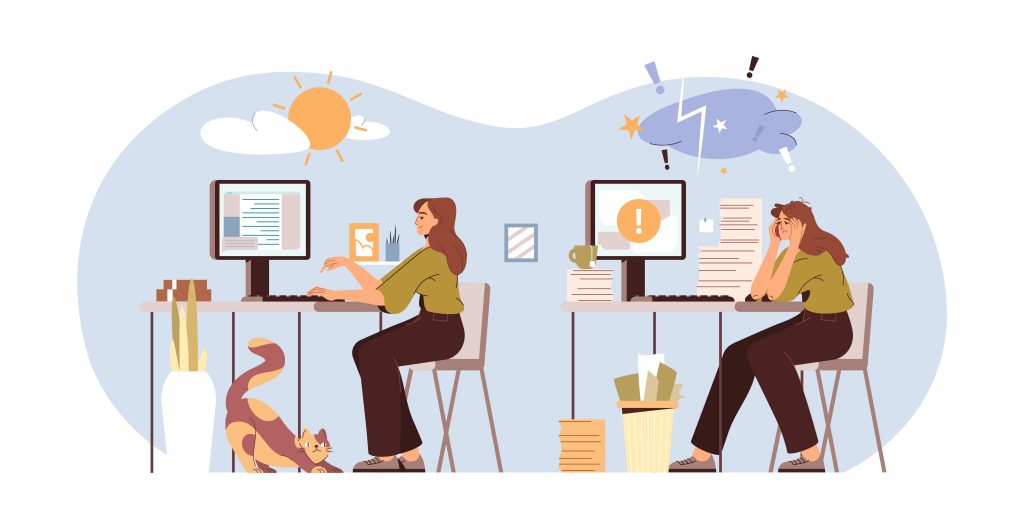
The next time you see a lethargic employee dozing off, it might be more than just a lack of sleep. Telling an employee to go home early and get some rest may not be enough.  There are underlying causes that leaders or bosses should know. It’s not employees are just physically exhausted. They can be mentally, emotionally and psychologically tired too.  Their well-being might also be at stake! Organizations should be watchful and recognize which employees exhibit the signs above.  The things you should know. First, a study showed that front-line employees are the most susceptible to burnout. Those who deal with customers daily can feel drained at the end of the day.  Second, the same study found that 16% of employees experience work conditions that affect their sleep. Again, this should be a wake-up call for management.  Third, 25% of employees feel exhausted after an average day at work.  Fourth, about a third of employees start the day low on energy. The personal lives of employees can affect their job performance. For instance, most people think of bills to pay, the health of loved ones and the state of their personal relationships. It’s easy to tell them to remain focused while at work. But, if workplace conditions increase stress and anxiety, employees and the organization suffer. The things you can do. 1.     Assign functions judiciously. As a means of staying afloat or profitable, organizations usually downsize. Additional responsibilities are passed on to the remaining employees. It’s common now for departments to take charge of functions unrelated to their area of expertise.  It’s best for management to study which worker can handle more work. It isn’t enough to determine if a person has the required skills. One of the questions you must answer is whether that person can handle more stress. 2.     Conduct job evaluations regularly.  Ideally, employees should enjoy their job. But, maybe they are lethargic because there are tasks that they dislike doing. Or they no longer find their work motivating. As a result, they’re no longer excited to get to work.     3.     Evaluate your physical workplace. Cramped cubicles, uncomfortable chairs, poor ventilation and lighting have adverse effects. Keep in mind that employees spend at least 8 hours a day at work.  4.     Create or Update your Wellness Program. It doesn’t matter if you lead or manage a small organization. These programs aren’t for big groups only. Consider the following benefits: a.     Improved employee health habits. b.     Reduced stress and anxiety. c.     Improved employee performance. d.     Lower health care costs. Feature photo: Burnout vector created by redgreystock

Wellness Statistics You Should be Aware Of Đọc thêm »

Why Unfinished Business Always Pops in Your Mind

Before reading this, try to recall all the tasks you accomplished in the last five days. There’s a great chance you won’t remember all. Now, think of all the things that you left undone. But maybe you don’t have to because these keep popping in your head. And these might be causing stress right now. It’s not just tasks. How often have you stopped reading a book or watching a movie before the end? Yes, people love stories. But, they want to get to the conclusion as not knowing can drive them crazy. What can explain this behavior?  Well, have you ever heard of the Zeigarnik Effect?  a psychologist, postulated that incomplete tasks were easier to remember than completed ones. These remain in people’s conscious minds because they cause mental tension.  It’s no wonder you recall unfinished business repeatedly.  Not all experts agree on the effect, as more research has to be done. One of the questions is whether this is good or bad. But, everyone can agree that when you experience it, there are ways to deal with it. Here are three:  Accomplish your tasks promptly. It’s relative for each person. Many jobs cannot be done by the end of a day. But, by completing small chunks daily, you finish the whole sooner.  People put off working on tasks until the last minute. In short, they procrastinate. Everyone does. If you want to ease stress, begin working on your tasks ASAP.  And, why not reward yourself when you accomplish something. It could be a glass of that expensive wine you’ve been saving.    Use the Effect for your Benefit.   If the Zeigarnik Effect is real, use it to help you. For instance, if you’re preparing for a presentation, forget cramming all that information in one sitting. Instead, divide these into smaller portions. Focus on each and take breaks. Then move on to the next one. You’ll realize you retain more data because your brain tells you that your presentation isn’t complete. Maybe you could use it in your job? Ads and movie trailers are good examples. Marketers use story-telling to get customers to stay tuned.  Use it as Motivation. Maybe you have an alarm clock or use your smartphone to wake you up. You won’t believe it, but these regularize your sleeping behavior.  Treat the Zeigarnik Effect as an alarm to attend to unfinished business. If you want that internal reminder to go silent, finish whatever you started. Instead of bugging your mind, treat the effect as motivation. 

Why Unfinished Business Always Pops in Your Mind Đọc thêm »

Why To-Do Lists are Good for You

Post-it notes have become part of people’s lives. You’ll find it everywhere – on desks, the fridge, walls and doors. These are constant reminders of all the tasks that need to be done. Whether it’s not to forget to buy milk on the way home or pay bills, people are helped a lot by little pieces of paper. It’s not just Post-it notes. Others use memo pads, diaries and even their digital devices as reminders. Unfortunately, they can be overwhelmed by too many of these. But did you know that these can significantly help reduce anxiety and accomplish tasks. >> You achieve clarity Writing down or typing tasks give you a clearer picture of what needs to be done. When you do, you often realize that it’s mostly small stuff. The human brain can create mountains out of molehills. Remember, a small rock can cast a large shadow. It makes a difference when people focus on the former and not the latter. When people specify, the job ahead becomes more effortless. Or, if a task is too big, breaking it into smaller chunks makes it more manageable. But write or again, type these down. >> You prioritize What needs to be done now or today? Itemizing tasks can help you determine which are urgent and not. This also enables you to focus on one task at a time. Tests have shown a to-do list helps people. Try this out? Think of all the tasks you need to accomplish and often, you’ll forget one or several. Also, you can’t possibly sort your mental list according to importance. Now, try writing these on paper. Wouldn’t you agree, there’s a vast difference? >> You can schedule Some people get rid of simple tasks that don’t require effort and thinking. This is because it takes them time to warm up. Others, they like to handle challenging jobs first thing in the morning. With a to-do list, you can schedule which tasks to accomplish first. You can even set a time for checking on your social media accounts. Doing so will allow you to achieve more during the day. >> You Get a Sense of Achievement Every time you check or cross out a task on your to-do list, you feel a sense of accomplishment. This is important because you become more motivated and engaged in whatever job you need to do. There’s nothing wrong with feeling proud. In fact, it has positive effects on your health too. So start working on your to-do lists. These can make your life a bit easier.    

Why To-Do Lists are Good for You Đọc thêm »

en_AUEnglish (Australia)
Lên đầu trang

Liên Hệ

Chỉ cần hoàn thành biểu mẫu bên dưới và chúng tôi sẽ liên hệ với bạn, thông thường trong vòng 24 giờ.

Nhập email của bạn để tải Tái Cấu Trúc Tư Duy eBook!

Bạn đã đăng ký bảng tin thành công

Đã xảy ra lỗi trong quá trình gửi yêu cầu của bạn. Vui lòng thử lại.

EQuest Asia sẽ dùng thông tin bạn cung cấp để trò chuyện với bạn, gửi tin tức mới và các hoạt động ưu đãi.

Nhập email của bạn để tải Cẩm nang Tạo dựng Môi trường Làm việc Hạnh phúc - eBook!

Bạn đã đăng ký bảng tin thành công

Đã xảy ra lỗi trong quá trình gửi yêu cầu của bạn. Vui lòng thử lại.

EQuest Asia sẽ dùng thông tin bạn cung cấp để trò chuyện với bạn, gửi tin tức mới và các hoạt động ưu đãi.

Nhập email của bạn để tải bài kiểm tra Đánh giá tình trạng quá tải!

Bạn đã đăng ký bảng tin thành công

Đã xảy ra lỗi trong quá trình gửi yêu cầu của bạn. Vui lòng thử lại.

EQuest Asia sẽ dùng thông tin bạn cung cấp để trò chuyện với bạn, gửi tin tức mới và các hoạt động ưu đãi.

Nhập email của bạn để tải EQuest Asia Brochure!

Bạn đã đăng ký bảng tin thành công

Đã xảy ra lỗi trong quá trình gửi yêu cầu của bạn. Vui lòng thử lại.

EQuest Asia sẽ dùng thông tin bạn cung cấp để trò chuyện với bạn, gửi tin tức mới và các hoạt động ưu đãi.

Nhập email của bạn để tải tài liệu!

Bạn đã đăng ký bảng tin thành công

Đã xảy ra lỗi trong quá trình gửi yêu cầu của bạn. Vui lòng thử lại.

EQuest Asia sẽ dùng thông tin bạn cung cấp để trò chuyện với bạn, gửi tin tức mới và các hoạt động ưu đãi.

Cảm ơn bạn đã đăng ký! Chúc bạn tải xuống thành công.

Cảm ơn bạn đã đăng ký! Chúc bạn tải xuống thành công.

Cảm ơn bạn đã đăng ký! Chúc bạn tải xuống thành công.

Cảm ơn bạn đã đăng ký! Chúc bạn tải xuống thành công.

Cảm ơn bạn đã đăng ký! Chúc bạn tải xuống thành công.